
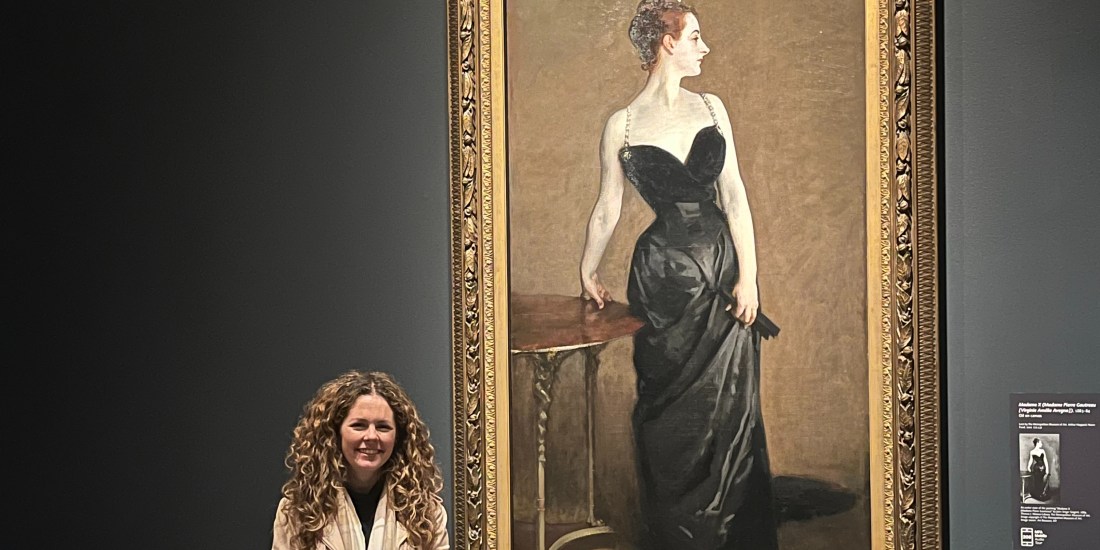
A few months ago, I visited the Metropolitan Museum of Art’s Watson Library to research items for my upcoming auctions. When I ran out of books to pull and had to wait for the afternoon page, I decided to stroll through the American Wing’s galleries. Something felt different and I couldn’t put my finger on it until I found John Singer Sargent’s (1856-1925) Madame X (1883-84) no longer hanging in her usual position. A kind security guard came up and whispered to me, “You can still see her before she leaves for the year.” Where was she going? Madame X is one of the jewels of the American Wing. Thousands of visitors flock to bask in her presence and gawk at her formerly slipping strap. Following the directions of guard, I found Madame X downstairs hanging unframed in the Met’s open storage. I later learned her frame had to undergo scheduled maintenance for her journey to Boston’s Museum of Fine Arts and later across the pond at to the Tate for the blockbuster American Art exhibition of the year, Fashioned by Sargent.

An unframed Madame X in open storage at the Met before her journey to the MFA for Fashioned by Sargent.
Instead of hitching a ride up to Boston with Madame Pierre Gautreau, I waited a few months to see this exhibition for myself. To prepare, I dove into an extensive #SargentSpam where I aimed to learn more about this polarizing figure in American Art. Sargent was a nineteenth-century expatriate American artist, born in Florence and became renowned for his portraits. Fashioned by Sargent highlighted his aforementioned skill and mastery of the medium.

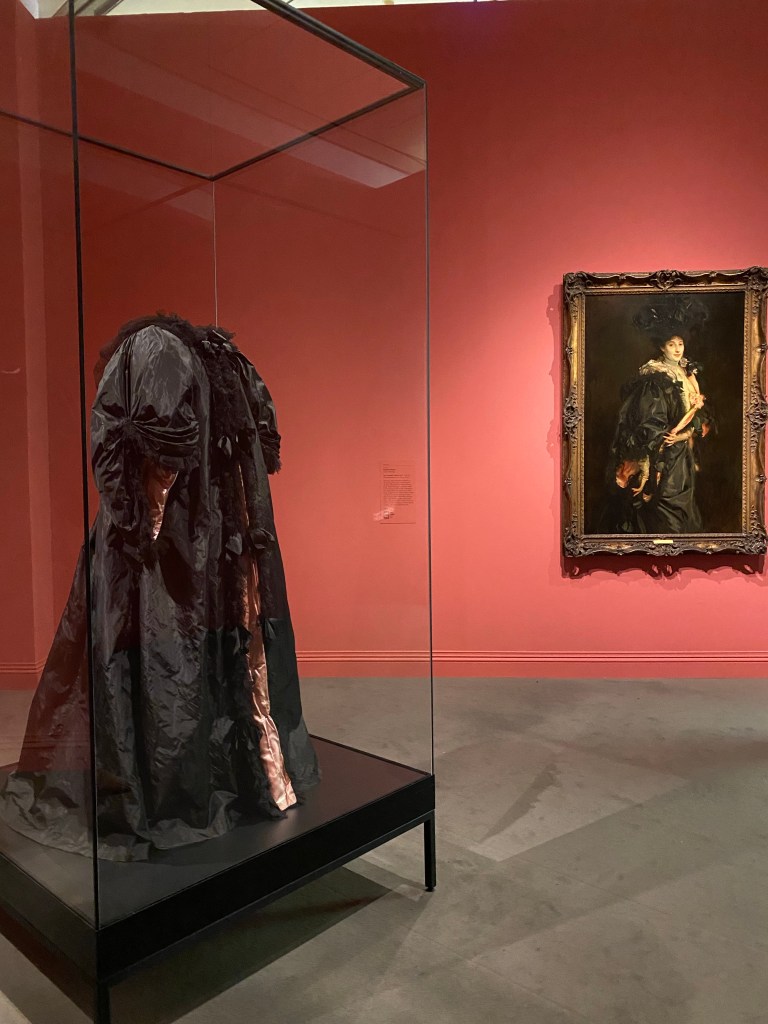
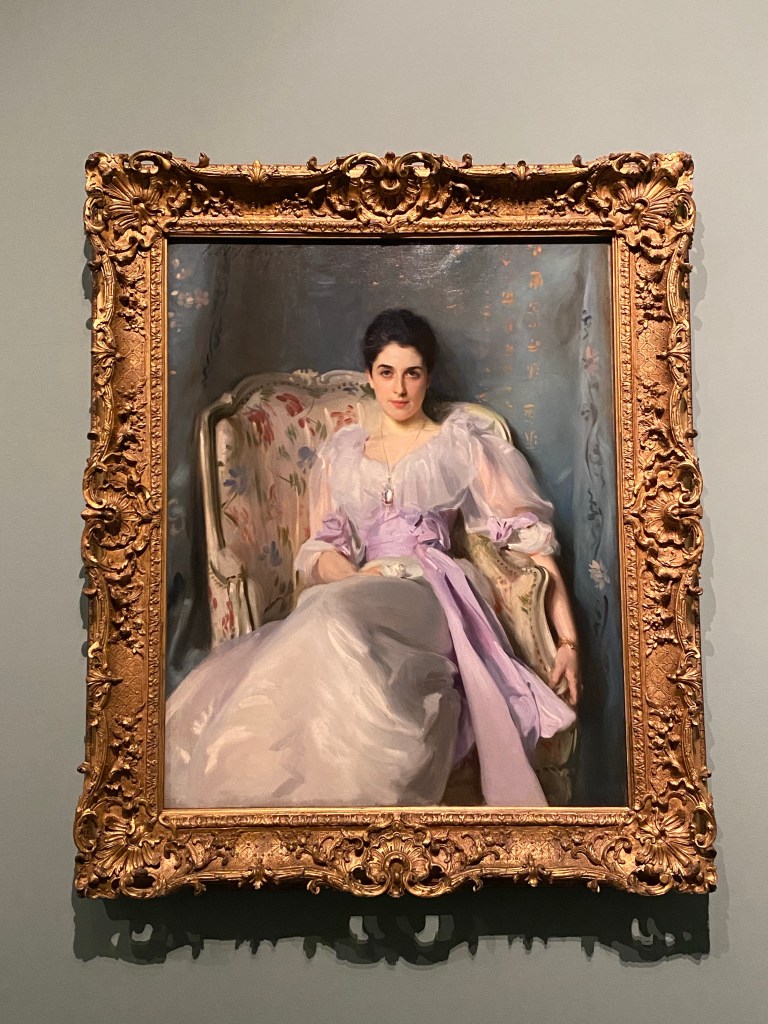
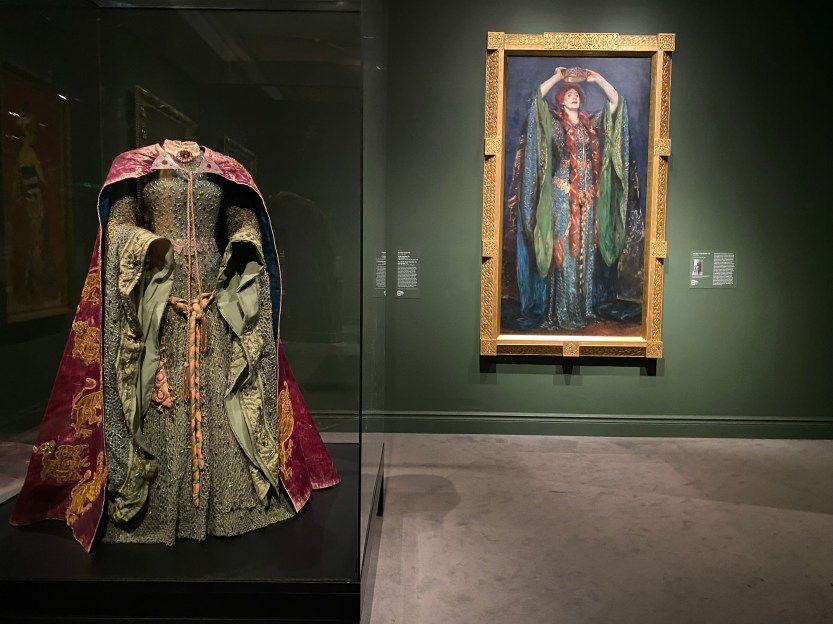

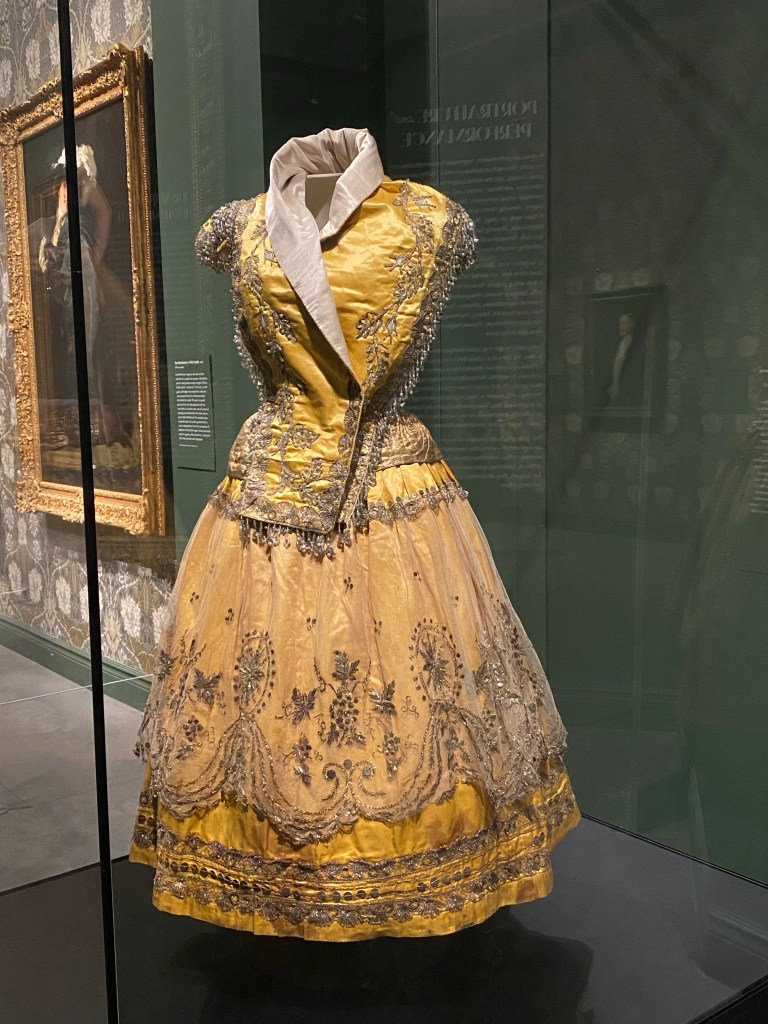

The exhibition examined a selection of Sargent’s portraits through a material culture angle: fashion. Sargent often chose what his sitters wore, and further manipulated the garments on the canvas by removing and fabricating elements. An example that illustrates this point is the 1887 portrait of Boston socialite, Mrs Charles E. Inches. The gown and portrait are positioned alongside each other in the gallery, but the textile, “is and isn’t” what Sargent chose to capture for his portrait. Viewing the paintings alongside clothing, personal items, and handwritten notes belonging to the sitters further humanizes the individuals portrayed. Through the exhibition labels, visitors uncover another layer to the paintings and the sitters portrayed in them. We learn quirky stories about the politics of the patron’s sittings with Sargent, familial relationships at play, such as a canvas of a mother juxtaposed alongside a portrait of her child, and ultimately Sargent’s connection to his sitters, whether they are friends, family, or patrons.


One of the major takeaways for me from this exhibition are the refined details Sargent worked into his creations. He captured gowns and props with such photographic realism that it is baffling to realize you are staring at paint. Take the portrait of Mrs. Leopold Hirsch (1902) as a pristine example; the rosy pink garment is draped over an intricate lace dress. Sargent add a further layer of detail by adoring the garments with a gray, regal pattern. The warm tones in Mrs. Hirsch’s skin and gown are further enhanced through the umber drapery directly behind the sitter. These two temperatures at play result in an exquisite picture which was hailed for its, ‘simplicity and dignity.’
Don’t be fashionably late to see this exhibition before it leaves for the Tate! It is bursting with fashion, flare, over 70 objects to explore, and a rare chance to see a renowned assemblage of portraits from the ever stylish, John Singer Sargent.
Categories: #marysmusings, #museum

 marysmusings.art