
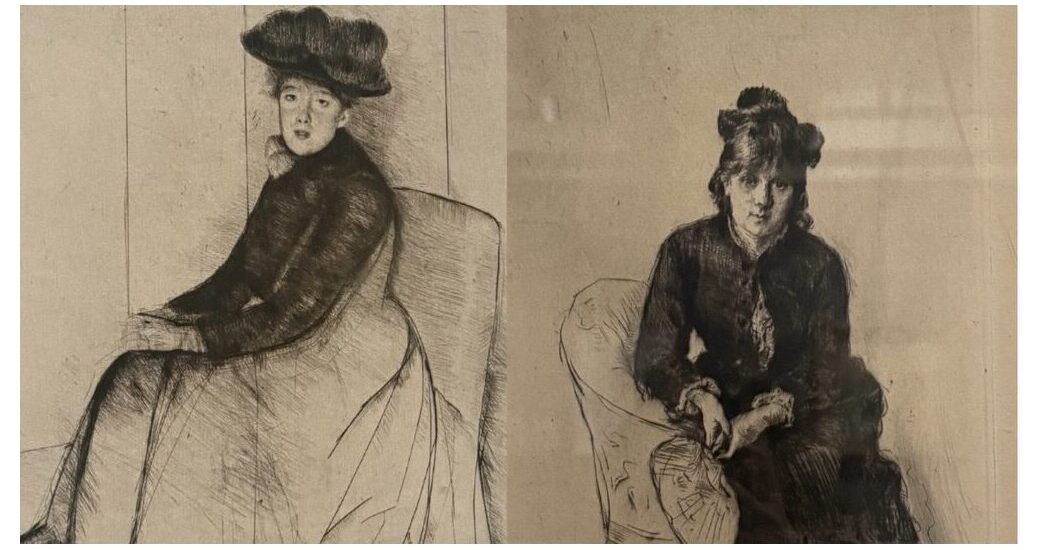
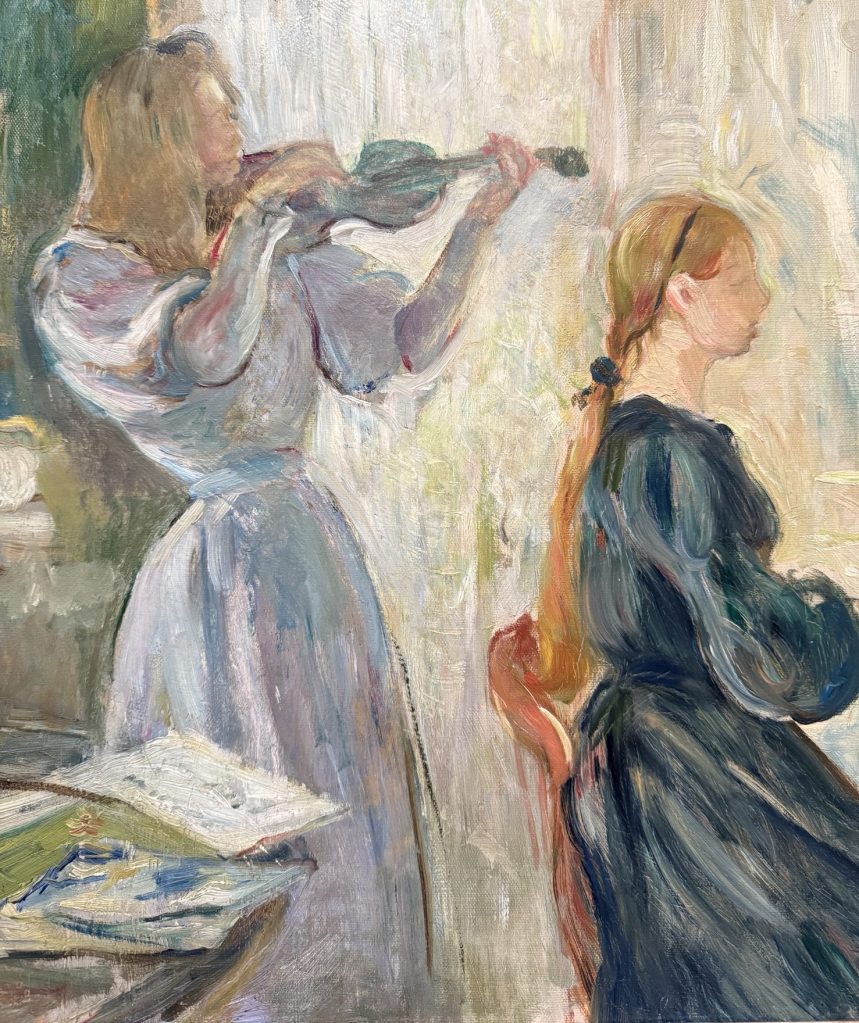
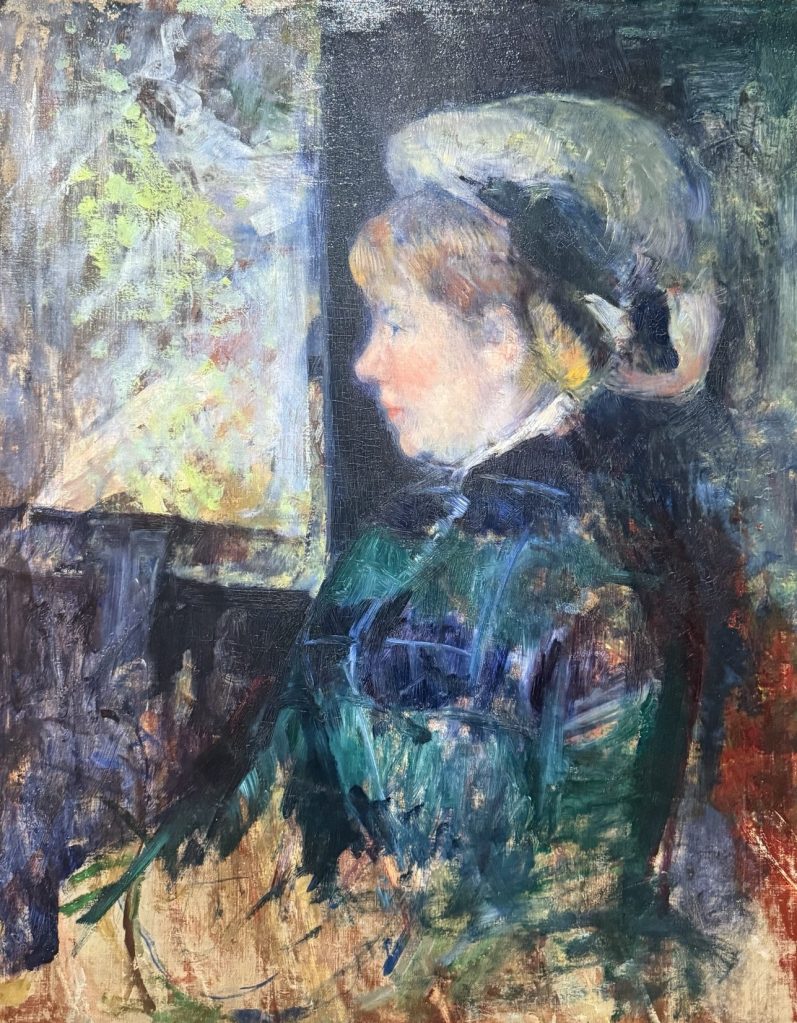
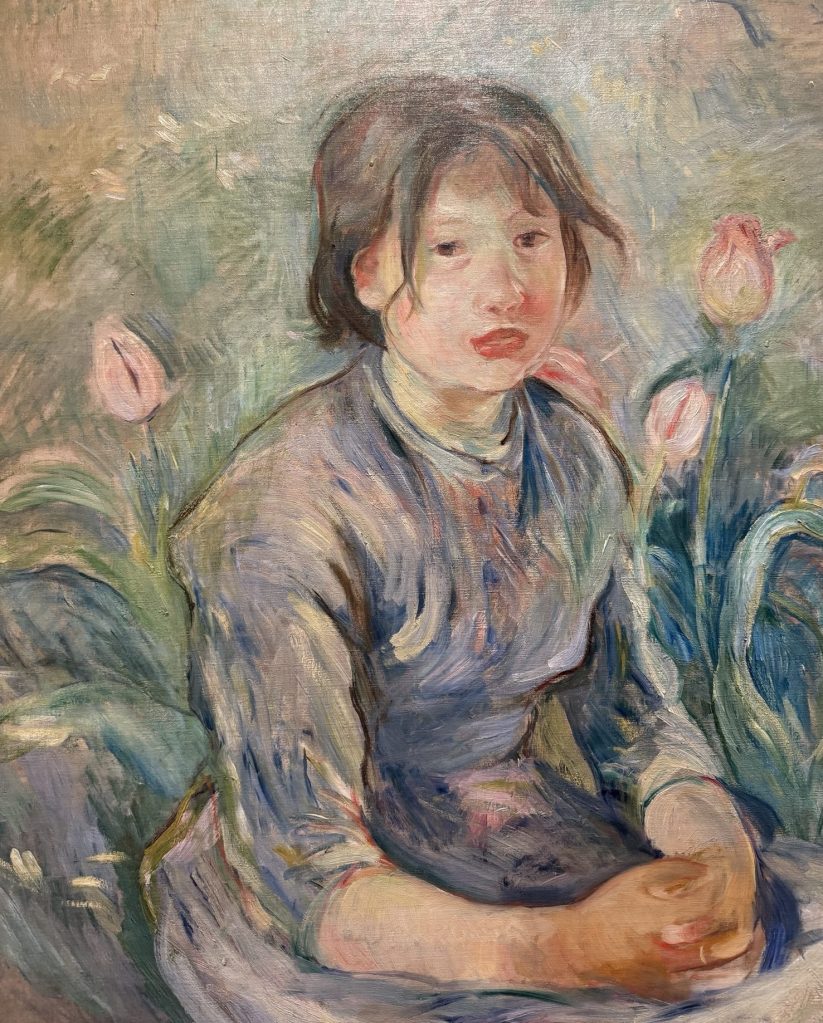
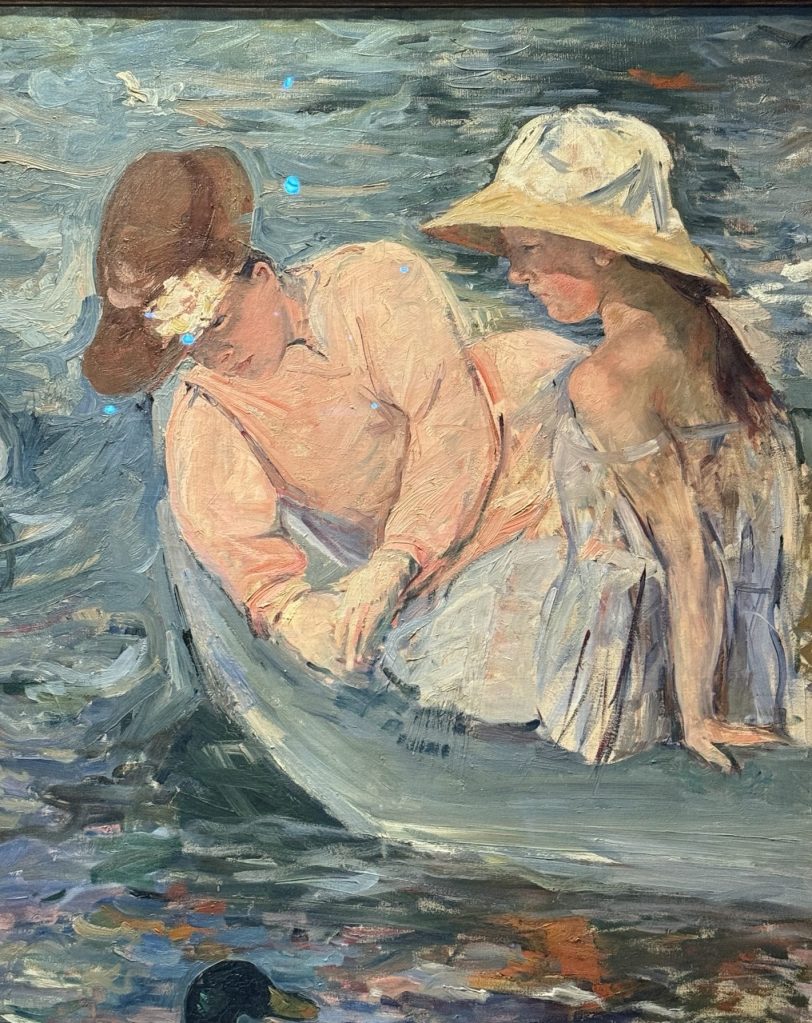

A handful of works by two noteworthy figures in the Impressionist movement are now on view at the Fenimore Art Museum in Cooperstown, New York. The exhibition aims to highlight the strides and ties between Berthe Morisot (1841-1895) and Mary Cassatt (1844-1926), and examines their personal and professional relationships through their correspondence and examples from their respective oeuvres.
Both Cassatt and Morisot strove to make art their viable profession, not relegate it to hobby. Morisot balanced the duties of a wife and mother in tandem with her career, while Cassatt never married. When viewed through this lens, it shows the multifaceted meanings inherent in their respective works and beckons a call to unpack them in light of this context. Julie Manet, Morisot’s daughter, often appeared as a favored model in many of Morisot’s works. While Cassatt did use her family members as sitters, she also was known to hire models for many of her iconic mother and child scenes.
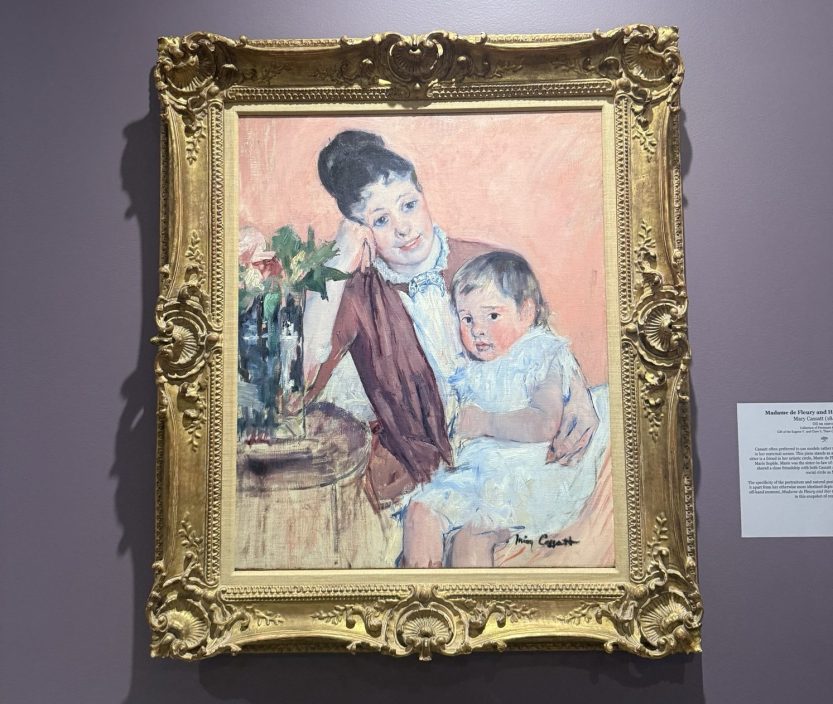
The only work in the permanent collection of the Fenimore on view in the exhibition is Mary Cassatt’s Madame de Fleury and Her Child, which was gifted to the museum in 2024. The portrait illustrates a deviation in Cassatt’s aforementioned process, as she chose to paint a friend and as the title suggests, the child is biologically related to Madame de Fleury. Another subtle achievement in Allies in Impressionism is the volume of loans from both private collections and public institutions that were brought together and curated to illustrate the overarching theme of the exhibition.
This exhibition struggled with space. When viewing two works by Cassatt and Morisot alongside one another, there is only such much space that can be yielded for wall text. There was a subtle understanding that one should approach this exhibition with their eyes to analyze the stylistic and visual similarities between these works as opposed to reading placards of wall text stating the aforementioned point. One needs to only view a sampling of Morisot and Cassatt’s genre and portrait scenes to see how they individually imparted their own mark on these traditional artistic endeavors.
I’ve had the pleasure to view two respective solo exhibitions on Morisot (at the Barnes Foundation in 2019) and Mary Cassatt (at the Philadelphia Museum of Art just last year). The chance to see their physical works juxtaposed alongside one another was a trip I was thrilled to embark on and take advantage of. When viewed through the lens of gender, it’s clear to see why these two pioneers are forever linked, but when viewing them in light of their personal lives, two different female figures emerge, with two distinctive styles.
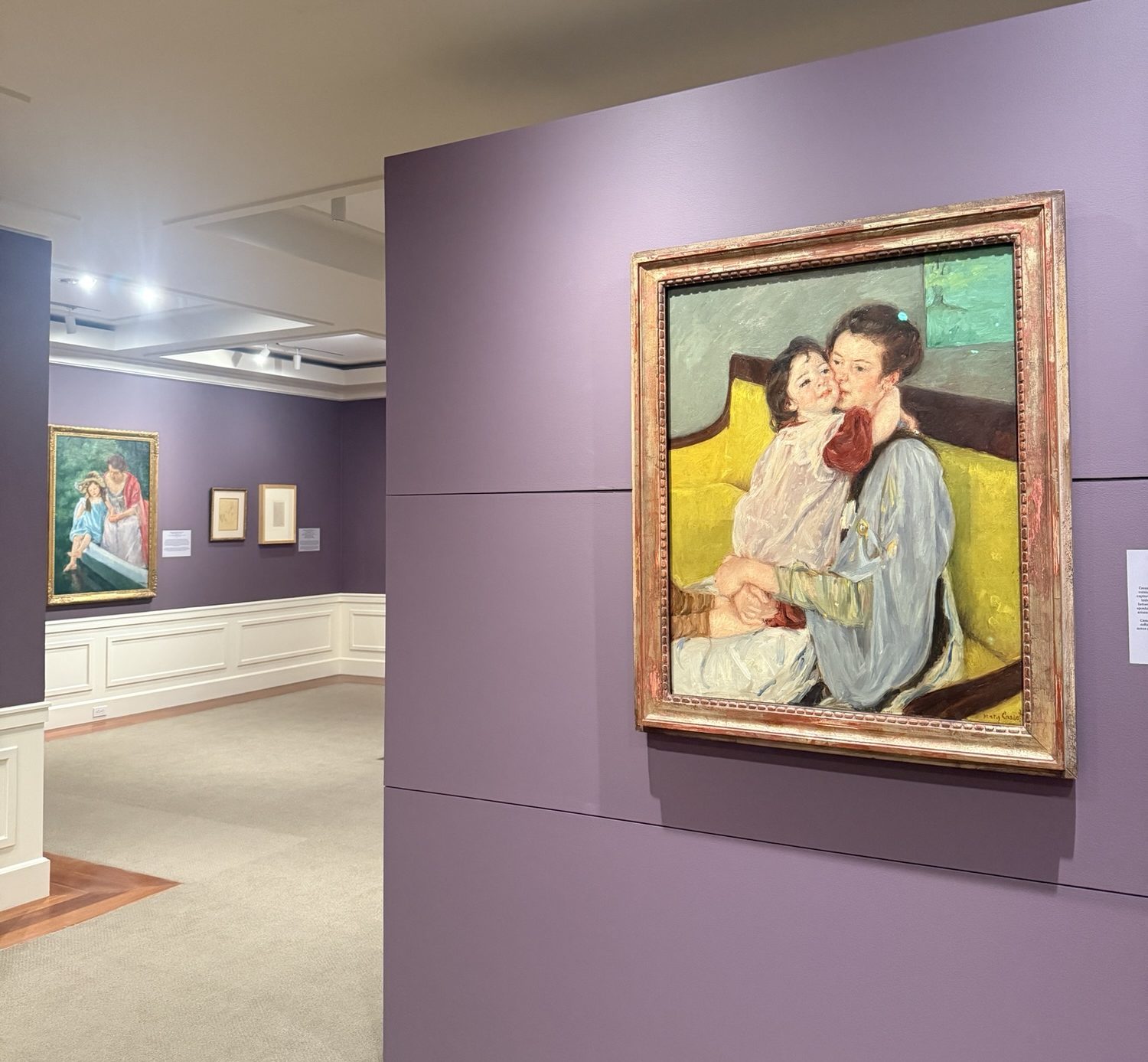
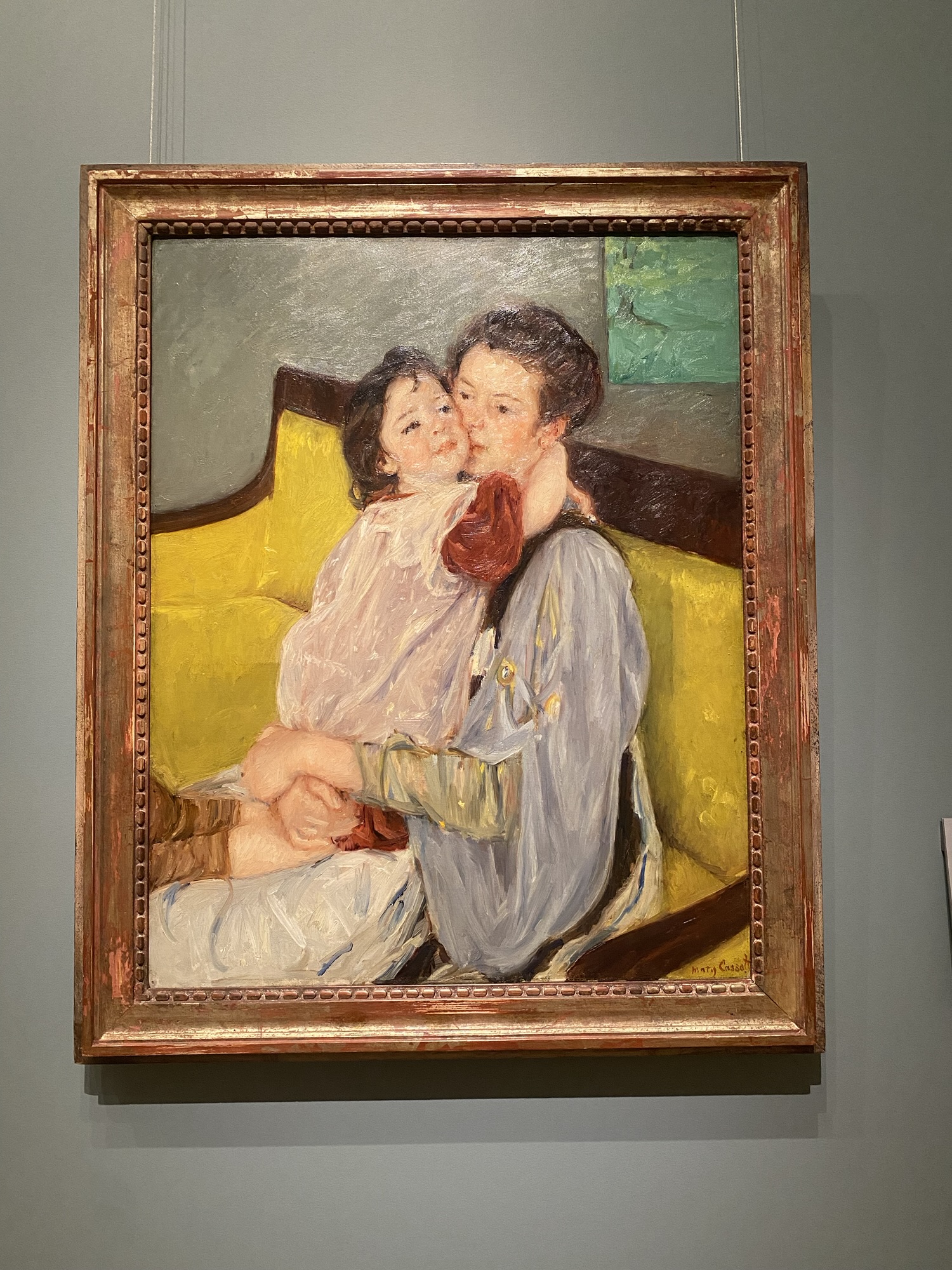
This exhibition also offered an excuse to visit the impressive American Art collections at the Fenimore. Housed in a 1930’s mansion, it offers an intimate curation of works by 19th and 20th century American artists among the likes of Thomas Moran, John Singer Sargent, William Glackens, Robert Henri, William Merritt Chase and John Sloan, to name a few.
Overall, I was pleased with my recent trip to Fenimore. If you’re in New York, it’s the perfect weekend getaway for art, fresh air, and perhaps even go look at a few baseballs at the National Baseball Hall of Fame down the street.
Categories: Uncategorized

 marysmusings.art