

Last Halloween, the Princeton University Art Museum made history with its reopening to the public after being closed for five years. Instead of extending hours over several days to accommodate crowds, the museum remained open continuously for 24 hours. Friends and colleagues told me they visited during that window—some even at 3 a.m – talk about a night at the museum!
I finally made my way down to see the renovations in December and decided to share my thoughts. My visit was highly anticipated, dating back to the pandemic, when I regularly read collection highlights in Princeton University Art Museum Magazine and followed construction updates. As one of the oldest collecting institutions in the United States, the museum was especially compelling to me as an admirer of American art.
The reported $300 million renovation quadrupled the size of the galleries and introduced new conservation studios, educational spaces, and other facilities. Home to approximately 117,000 objects, the museum has benefited tremendously from the expanded footprint.
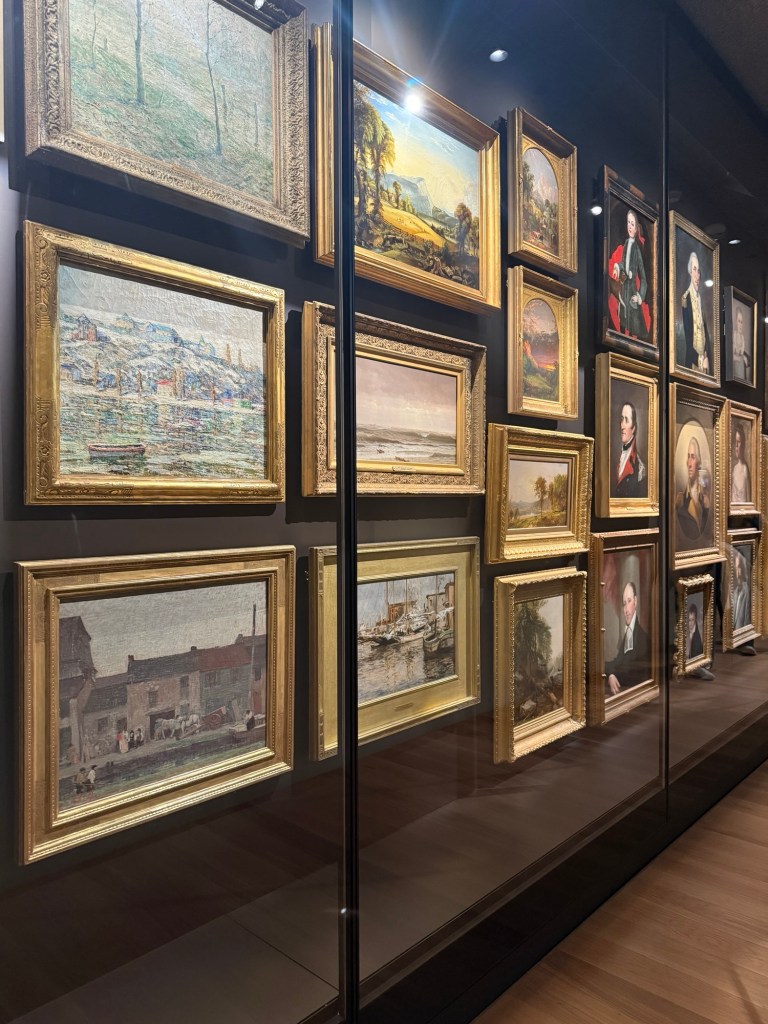

The galleries feel warm and thoughtfully designed, with architectural curation that separates spaces by genre while maintaining accessibility and clear sightlines. Upon ascending the main staircase, visitors are greeted by a square installation of collection highlights, featuring a range of paintings, decorative arts, and sculptures.’
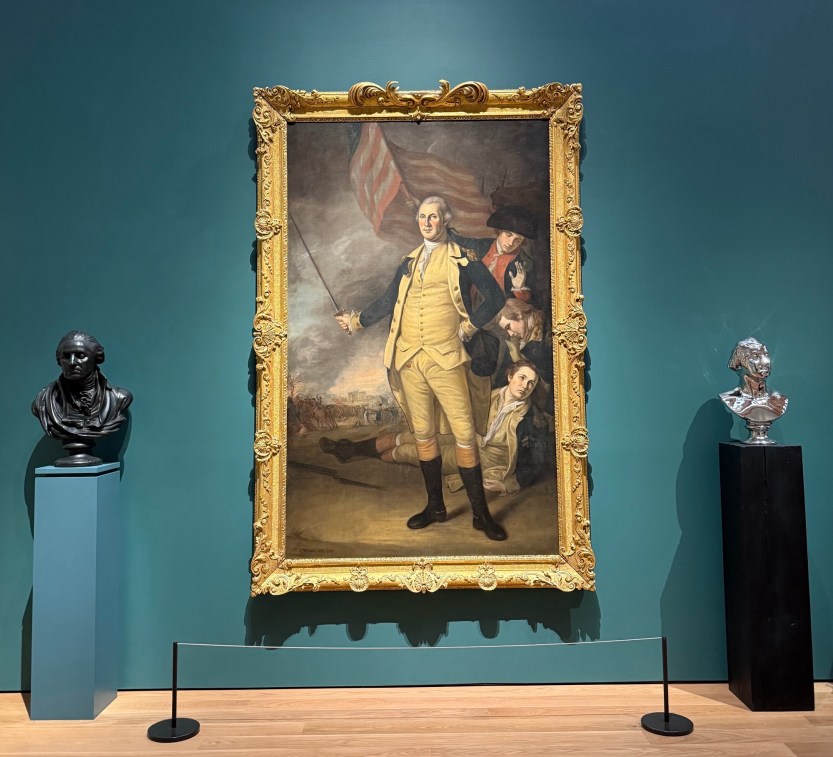
As expected, my personal favorites were the American Art galleries. Entry into this space requires walking down a long hallway, at the end of which hangs a monumental painting: George Washington at the Battle of Princeton (1783-1783) by Charles Willson Peale (1741–1827). Following the Battle of Trenton, General George Washington and his troops clashed with British forces in Princeton, New Jersey, emerging victorious. This triumph boosted American morale and prompted the British retreat from the Garden State.
In an effort to rebuild their collection, which had been destroyed during the battle, and to commemorate this American victory, Princeton trustees commissioned the eminent artist Charles Willson Peale to paint a tribute to the moment from life. This work should not be confused with Peale’s variant George Washington after the Battle of Princeton (1779-1782), which is also part of the museum’s collection but was not on view during my visit. The dramatic intensity of the battle, most notably the death of General Hugh Mercer and the rallying troops in the background, is powerfully conveyed, though not without some artistic embellishment.
The gilded frame is flanked by sculptural representations of Washington. The work I spent the most time with was a painted plaster bust by master sculptor William Rush (1756–1833). This bust is believed to be the only surviving replica directly produced by the artist, and museum art historians strongly suspect it once belonged to Thomas Jefferson’s collection.
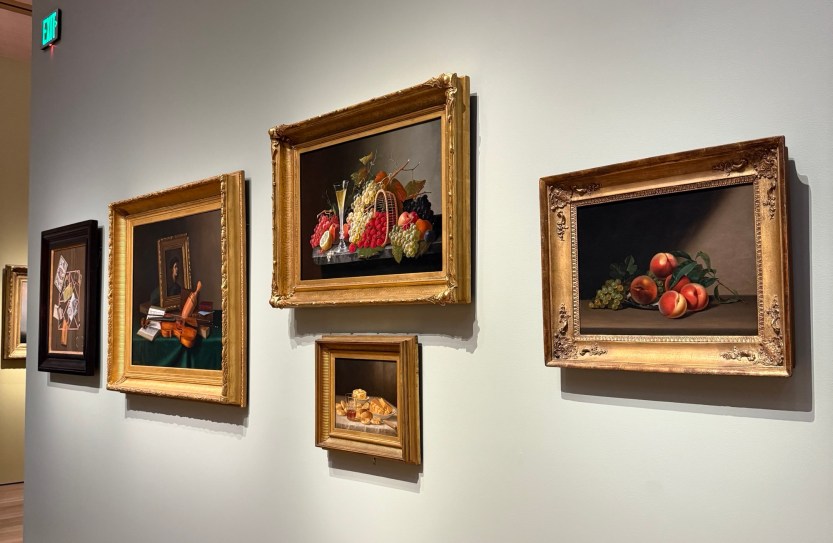
You often hear of budding artists throughout art history visiting renowned institutions such as the Louvre, the Uffizi, or even the Pennsylvania Academy of the Fine Arts to study exemplary works. At the Princeton University Art Museum, the didactic ambiance was particularly palpable for me at the still life wall. There, a label card introduced a brief survey of still lifes in American art, showing how the genre evolved over time through selected works by Raphaelle Peale (1774–1825), Severin Roesen (1816–1872), John F. Francis (1808–1886), William Michael Harnett (1848–1892), and John Frederick Peto (1854–1907). It remains one of my favorite hangs I’ve seen in a museum, further enhanced by the label’s clear presentation of the evolution of American still life.
Visiting the Princeton University Art Museum was a rewarding experience, offering both stunning works on view and in open storage. It was a truly unforgettable trip, well worth the five-year wait.
Categories: #marysmusings, #museum

 marysmusings.art