
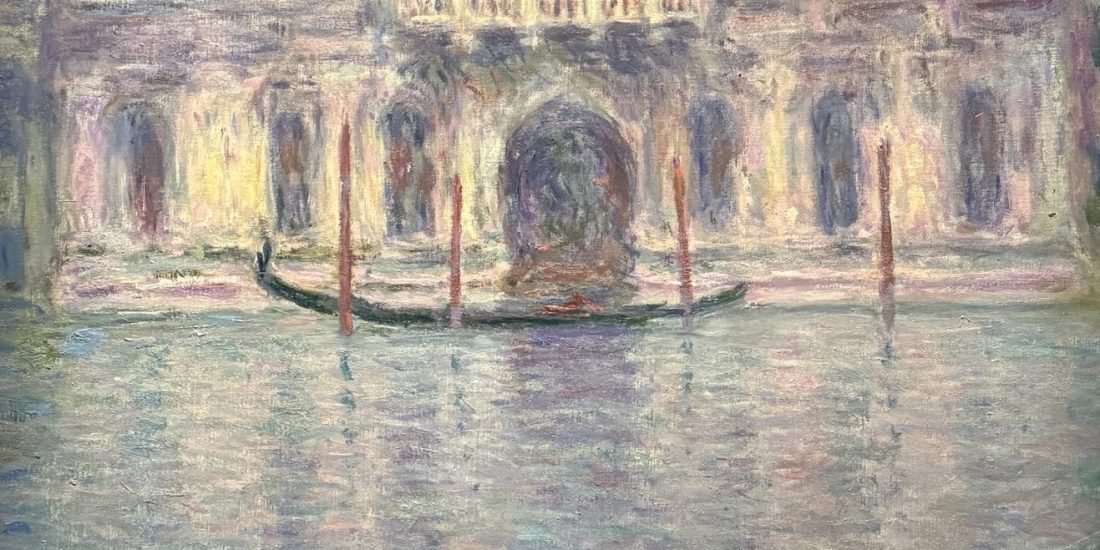
Believe it or not, Claude Monet was once quoted as saying, “I will not go to Venice.” Thankfully, he was not a man of his word. At the age of 68, in October 1908, Monet traveled to the Floating City to paint. The latest blockbuster exhibition at the Brooklyn Museum, Monet & Venice, documents this pivotal moment in the artist’s oeuvre, one that yielded 37 canvases capturing the splendor of the Italian city.
On a whim, I decided to go. I’ve visited Venice twice and carry serene images of its beauty ingrained in my memory. I’ve also encountered a handful of Monet’s “one-off” Venetian works. Two that come to mind are Le Grand Canal et Santa Maria della Salute, which passed through Sotheby’s a few years ago, and Palazzo da Mula, Venice, a tranquil gondola scene. As recent visitors to Venice will know, the city is plastered with tourists, particularly in the spring and summer. On my most recent trip, I practically had to walk single file along the Grand Canal due to the sheer sea of visitors.
Yet Monet chose to paint Venice devoid of humans in his compositions, concentrating instead on architecture, water, and the interplay of light. In doing so, Venice becomes an exploratory series, an opportunity for the artist to divulge his vision through palette and canvas alone.
After one failed attempt to get in (a shocking discovery on my end that, in a post–COVID-19 world, timed tickets are indeed a necessity), I managed to squeeze in a visit between appointments during the exhibition’s final week. I would liken the crowd size and cadence to Fashioned by Sargent: with minimal breathing room in the galleries, though, like any blockbuster, you’d be wise to cough up the Monet and buy tickets in advance to secure your spot.
My visit was fueled by a desire to see an exhibition devoted to one of Monet’s series. Throughout the late 1880s and ’90s, the artist explored subjects such as Haystacks, Rouen Cathedral, and Poplars, capturing the dynamic fluidity of a landscape shaped by changing seasons, time of day, and light. The result is a vague familiarity within each scene, yet each canvas stands as a new undertaking, defined by ever-shifting atmospheric conditions.
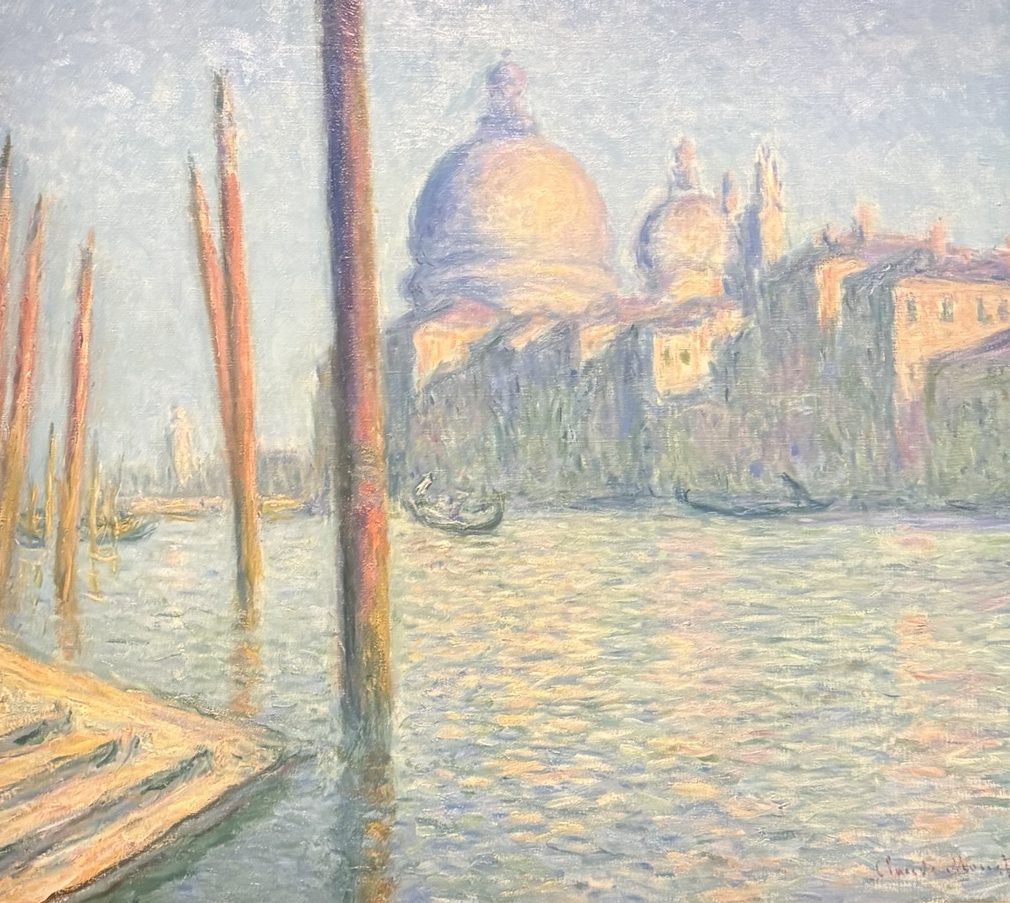
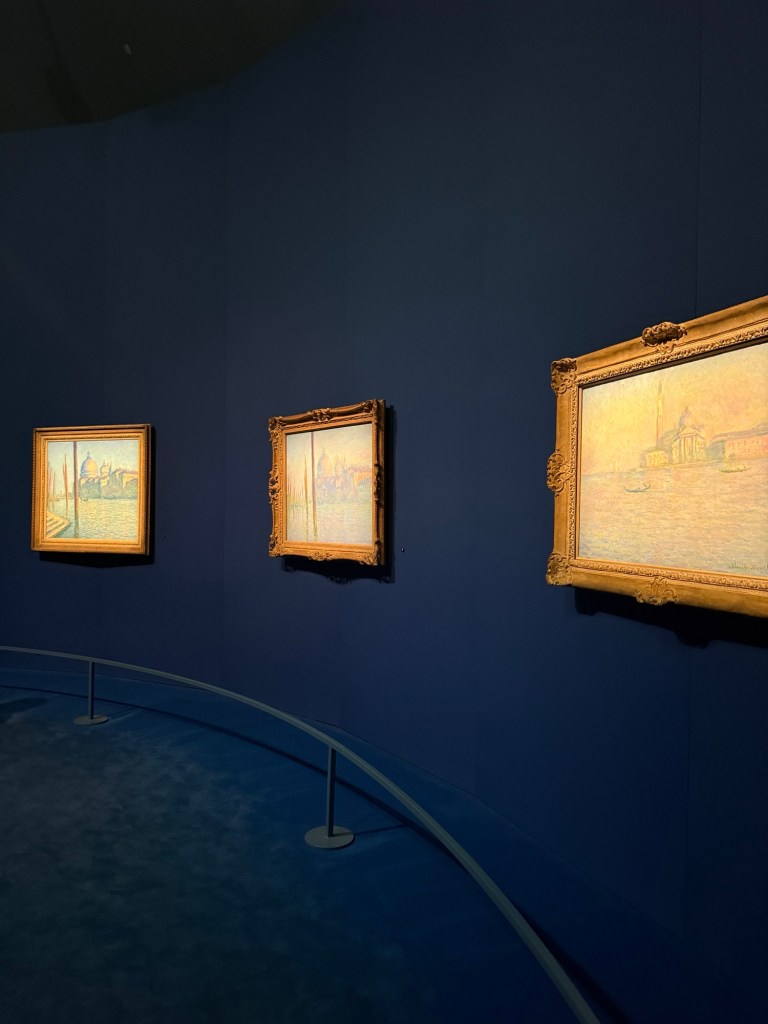
While some may argue that the exhibition feels repetitive, given Monet’s preference for a limited palette and recurring stylistic motifs, it nonetheless offers a concise yet thorough assessment of the artist’s time in Venice and his visual reflections on the city. The viewer encounters Monet’s vantage point from an anchored gondola, as well as from various positions along the edges of the canal. The exhibition also places Monet’s work in dialogue with artists who tackled Venice before him, as well as contemporaries such as Renoir, Sargent, and Whistler.
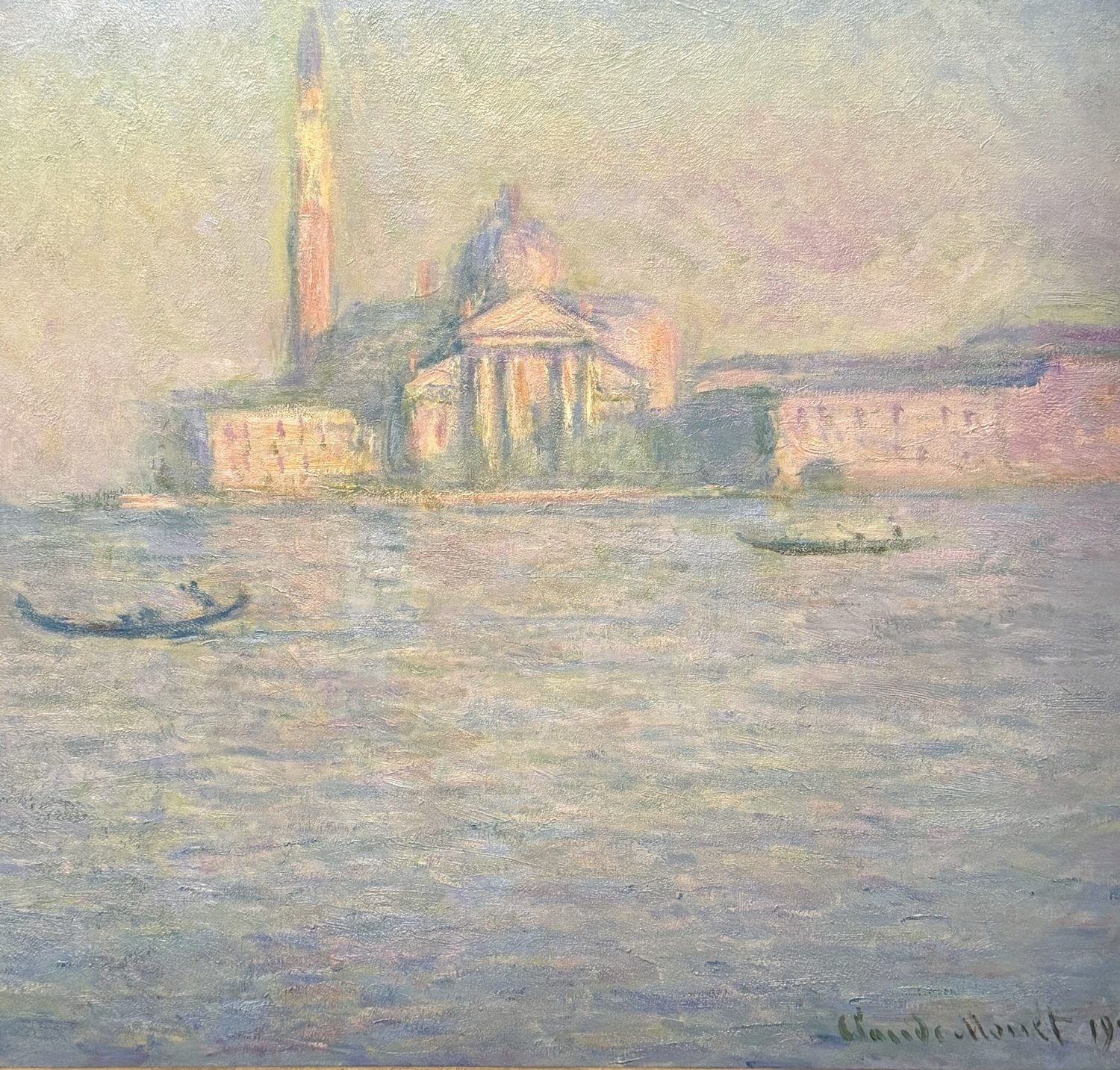
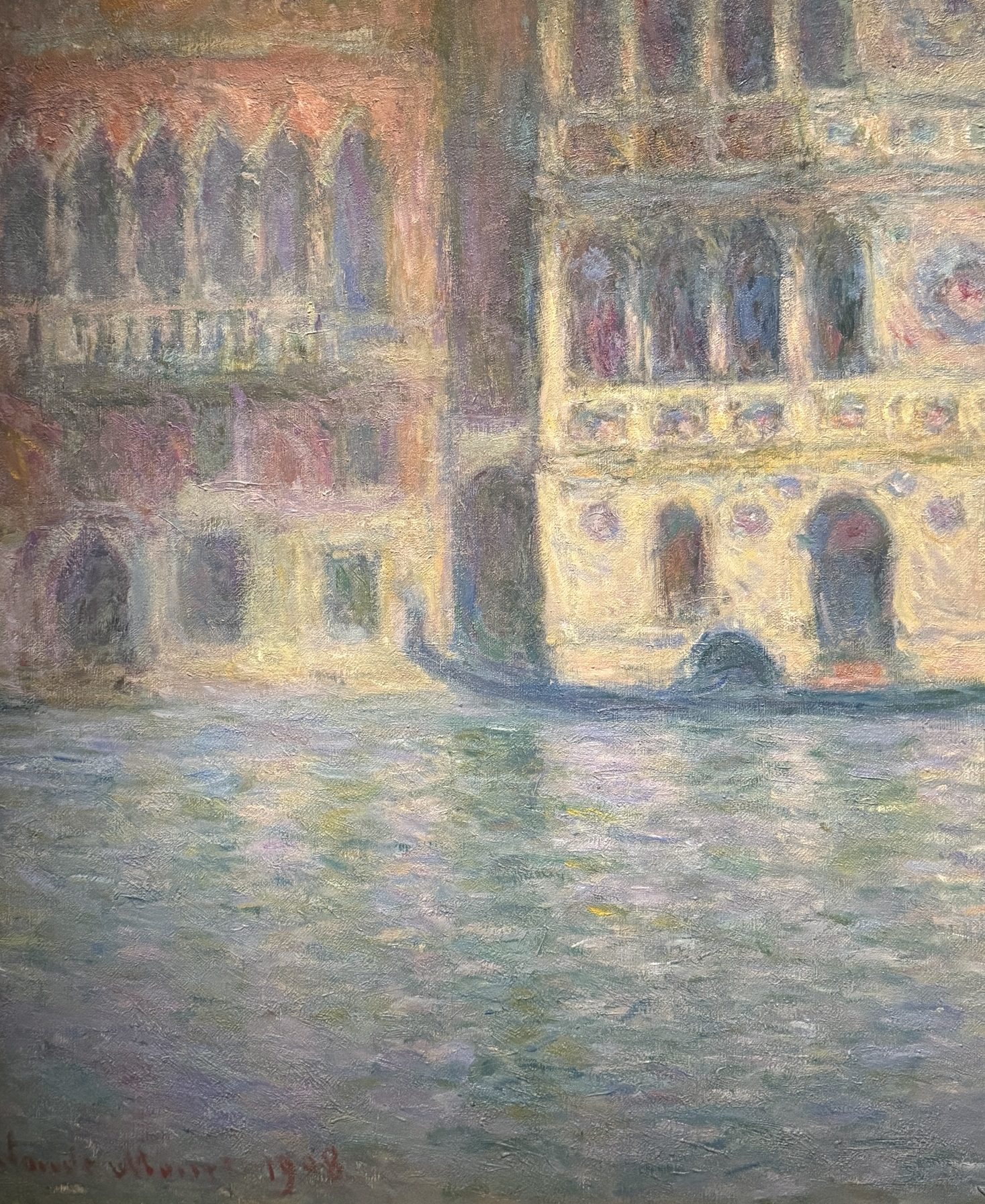
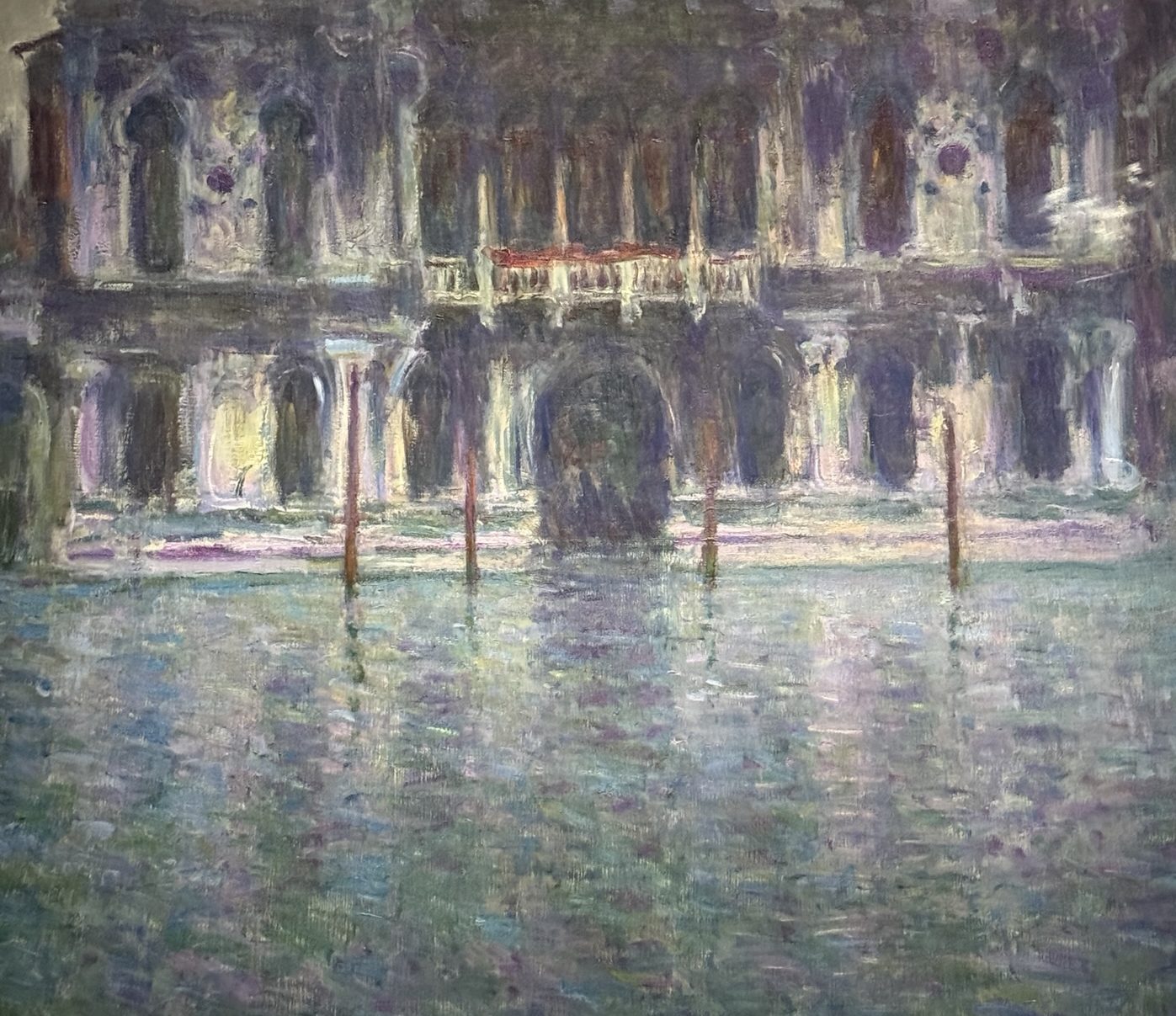
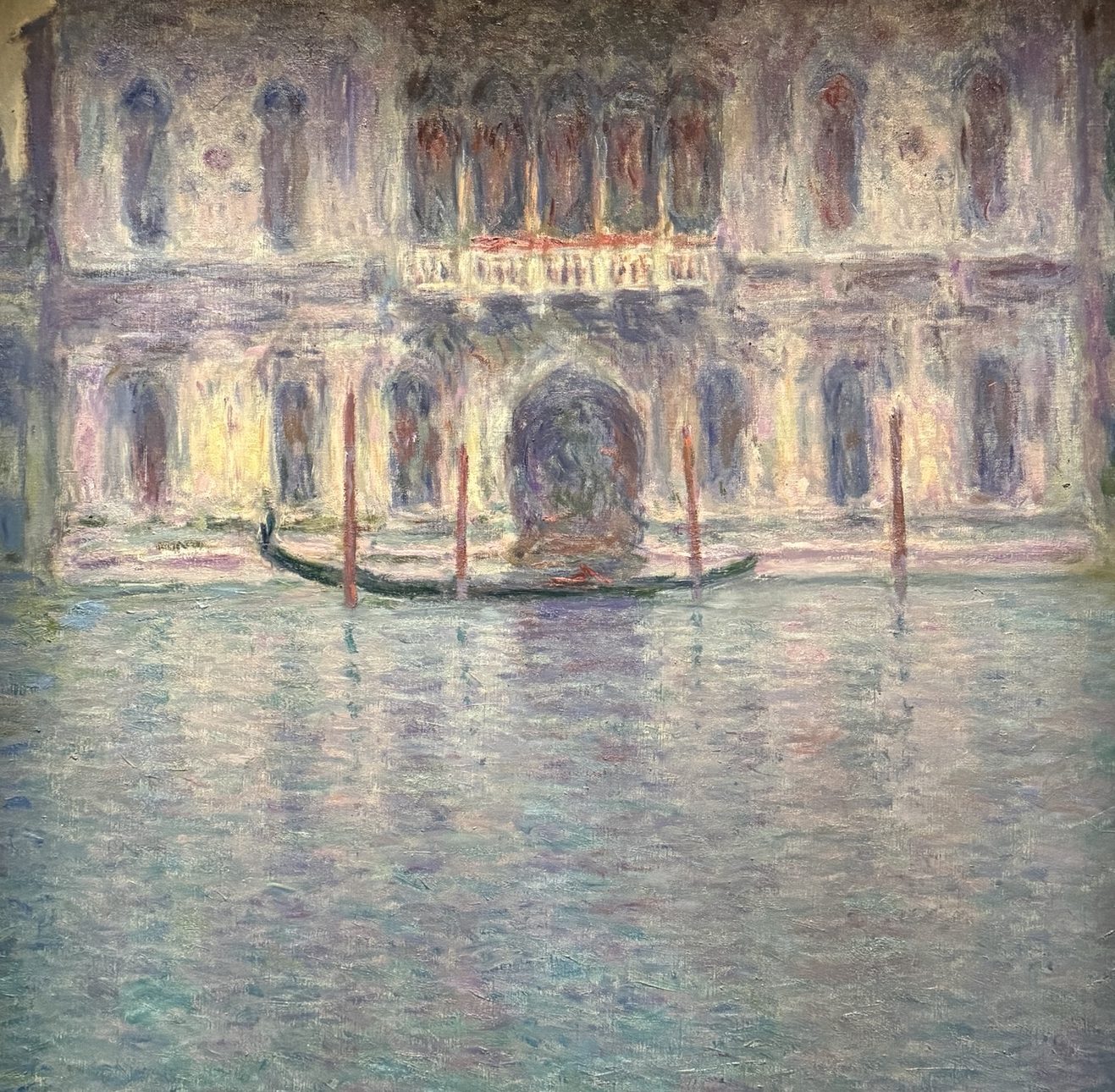
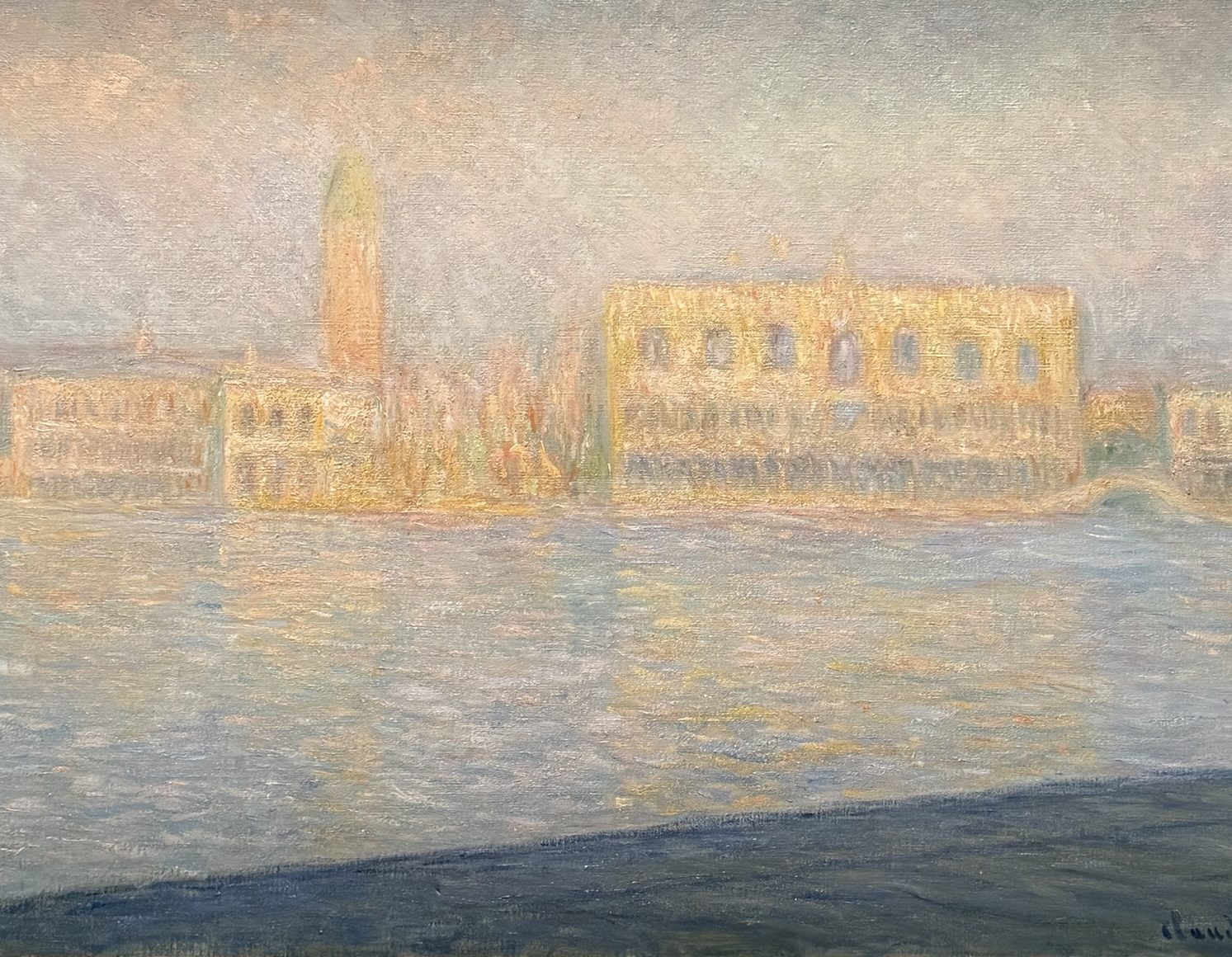
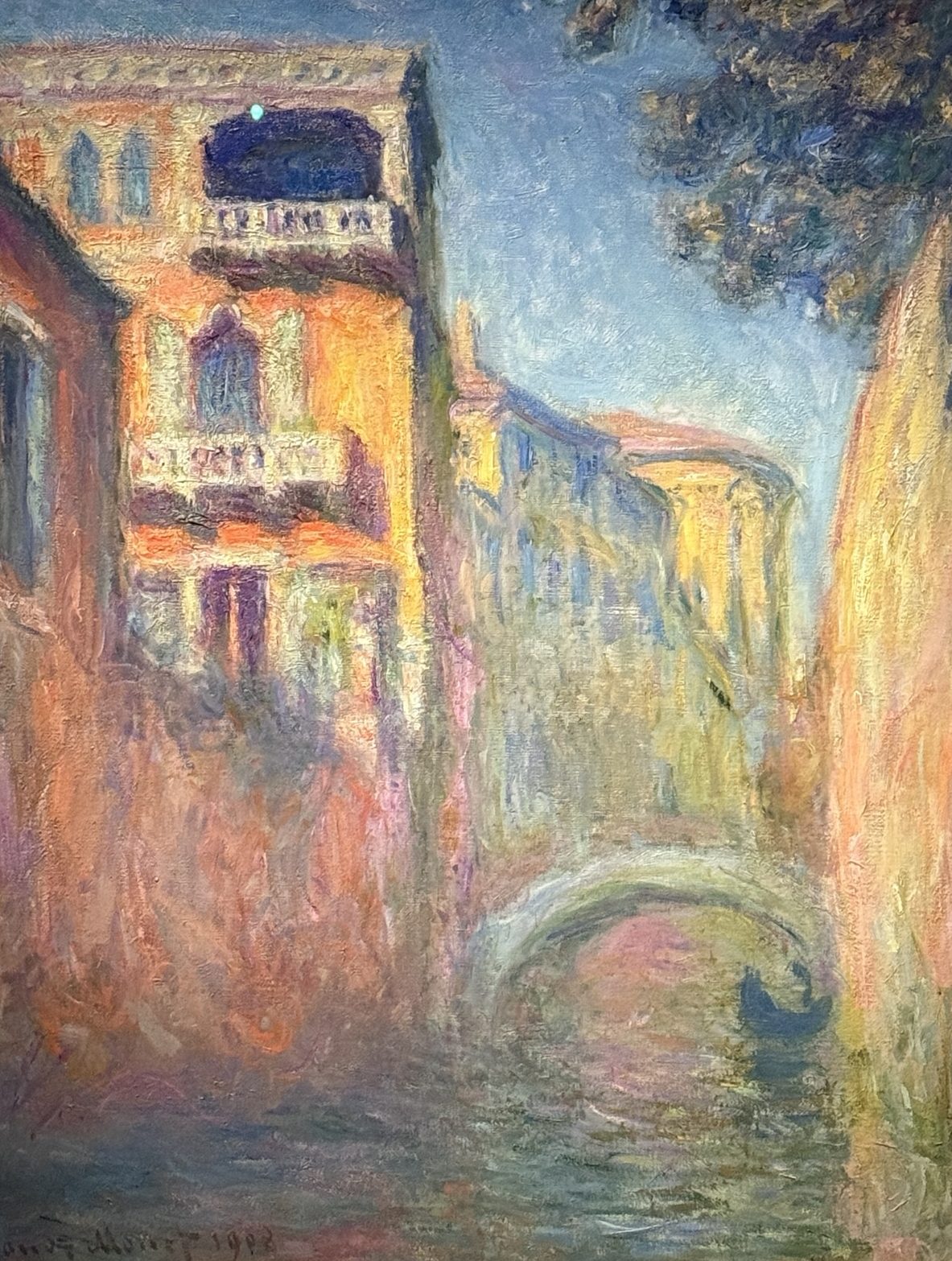
Monet rendered the choppy waters of the Venetian landscape in his own distinctive style, leaving an enduring impression—one that has made these select canvases highly coveted by both private collectors and major public institutions.
Monet & Venice ultimately affirms the series not as a detour late in the artist’s career, but as a continuation of his lifelong pursuit of atmosphere, perception, and time. It was worth the trip, and inspired me to make some pasta afterwards.
Categories: #marysmusings, #museum, Uncategorized

 marysmusings.art