
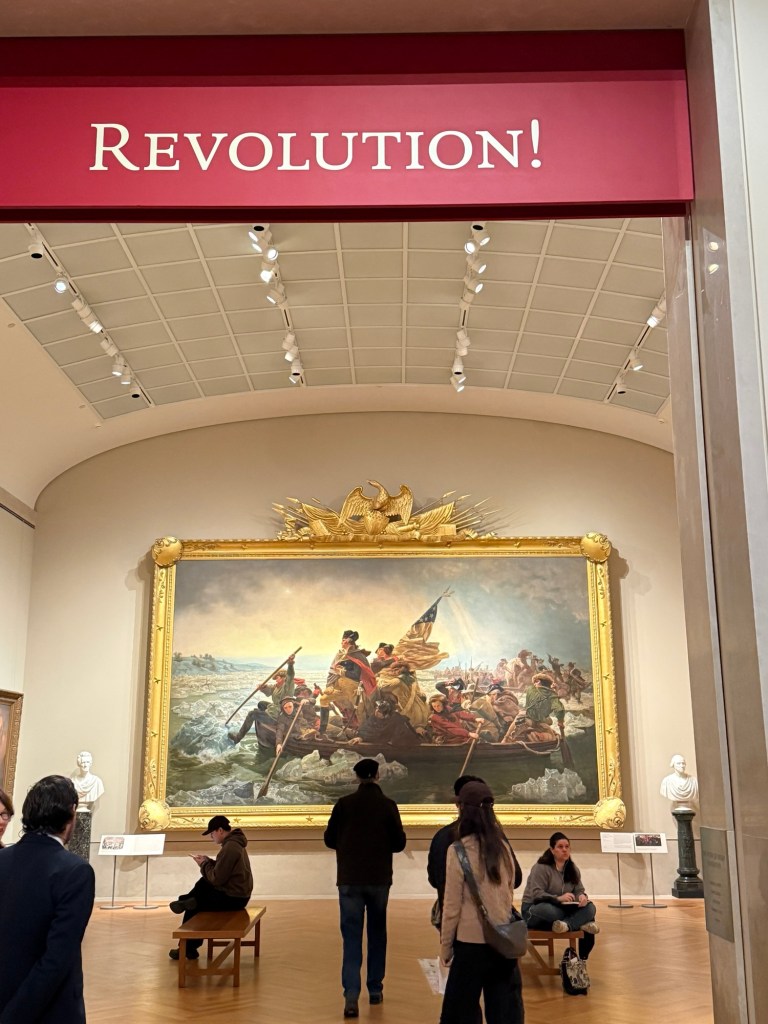
This year is shaping up to be a summer of rehangs and revisits for museumgoers. Across the country, institutions have embraced the semiquincentennial with ambitious rehangs of their permanent collections and special exhibitions that draw renewed attention to objects already in their care. Every time I cross one exhibition off my list, it seems I add two more. With so many museums reconsidering how they interpret and present American material and visual culture, this summer feels like an especially exciting moment.
While my museum itinerary is already jam-packed, I’m also working my way through a summer reading list. The first title in question arrived hand-in-hand with the prospect of visiting a new museum. Glorious Lessons: John Trumbull, Painter of the American Revolution explores the life and legacy of the artist, soldier, and historian John Trumbull (1756-1843). The book provides both a comprehensive biography and a thoughtful analysis of the paintings that helped shape America’s visual memory of its founding.
Trumbull was an eyewitness to the Revolutionary War. He was present at the Battle of Bunker Hill, became acquainted with many of the nation’s founding fathers, and served as an aide-de-camp to both George Washington and Horatio Gates. The son of Connecticut Governor Jonathan Trumbull, he nevertheless chose to pursue a career as an artist. In 1780, he traveled to London to study under the acclaimed history painter Benjamin West (1738-1820), where he also met fellow American artist Gilbert Stuart (1755-1828). West instilled in Trumbull the principles of history painting, teaching him how to adhere to the conventions of the genre while constructing a compelling narrative. Inspired by the events unfolding around him, Trumbull resolved to create a visual record of the American Revolution and the individuals who shaped it.
Like many of the principal actors in the conflict, Trumbull could not entirely shield himself from the politics of the Revolutionary era. Following the capture and execution of the British spy Major John André in 1780, British authorities arrested Trumbull in London on suspicion of treason. Though eventually released, the experience underscored the personal sacrifices and political tensions that accompanied the struggle for independence.
The “Painter of the Revolution” rightfully earned this nickname through his self-appointed civic duty to preserve the memory of the nation’s founding. As Trumbull later wrote, “To assist in preserving the memory of the illustrious events which have marked this period of our country’s glory, as well as the men who have been the most important actors in them, is the object of this undertaking.” More than simply documenting historical events, Trumbull sought to create a visual record of the Revolution that would educate future generations and foster a shared national identity. His paintings transformed recent history into enduring symbols of American independence, elevating contemporary figures into the realm of historical memory.
Following the burning of the United States Capitol during the War of 1812, plans were set in motion to rebuild and redecorate the structure. Trumbull recognized a rare opportunity to place his vision of the Revolution at the heart of the nation’s government. Through years of persistence, he secured a commission to create four monumental paintings for the Capitol Rotunda: The Declaration of Independence, The Surrender of General Burgoyne, The Surrender of Lord Cornwallis, and General George Washington Resigning His Commission. Installed between 1818 and 1824, these canvases remain among the most recognizable images of the Revolutionary era and continue to shape how Americans visualize their nation’s founding.
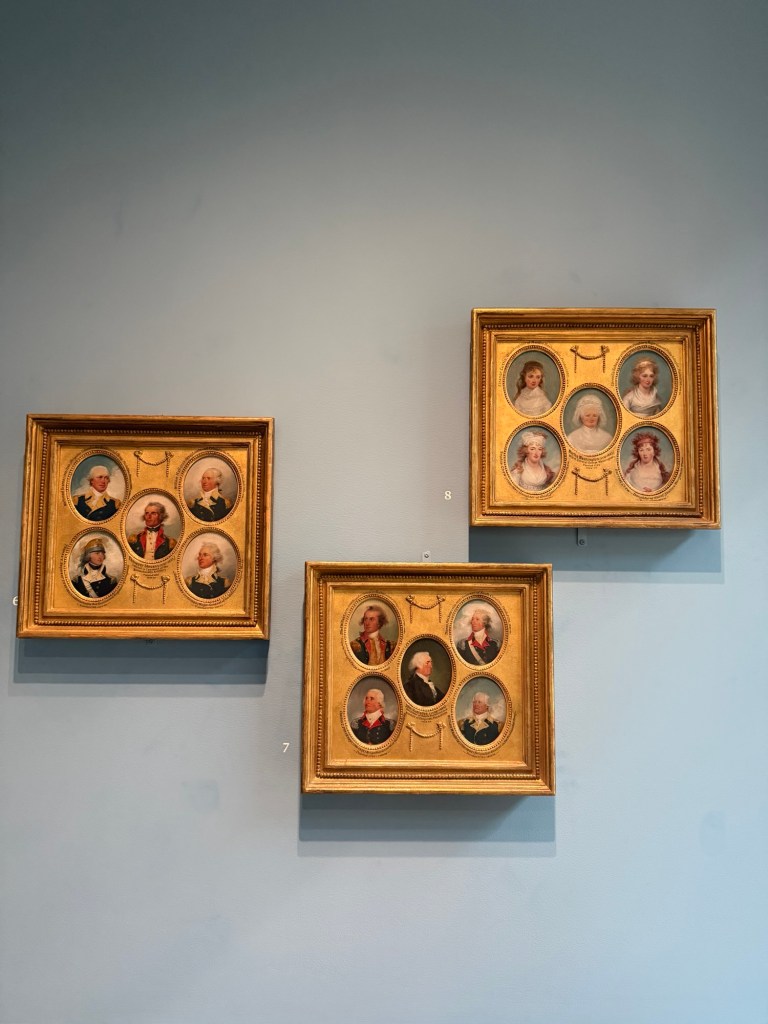
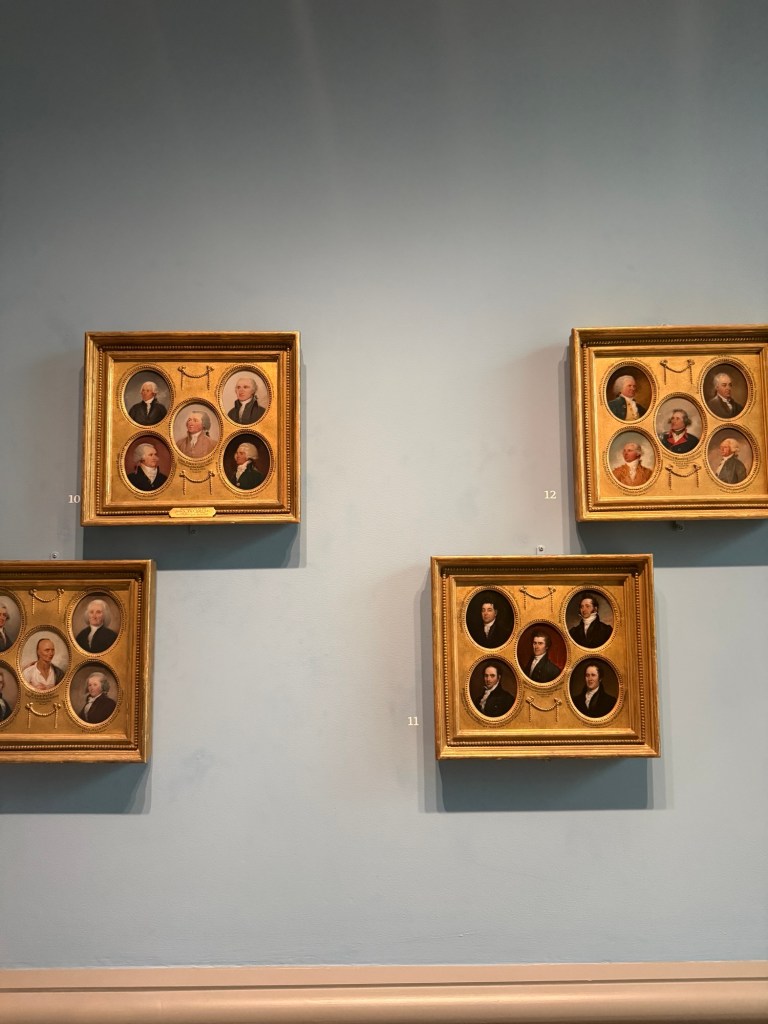
Trumbull’s commitment to preserving the history of the Revolution extended beyond his own lifetime. In 1832, Yale University established what would become the first college art museum in the United States when the artist donated twenty-eight paintings and sixty miniature portraits to the institution in exchange for an annual annuity. The collection formed the foundation of the Yale University Gallery and ensured that Trumbull’s life’s work would remain accessible to future generations. Yet the artist could not entirely part with the paintings that had occupied him for decades. As part of the agreement, he stipulated that a crypt be constructed beneath the gallery where he and his wife would be buried. Although the paintings have since been relocated to different buildings on Yale’s campus, Trumbull’s remains continue to rest beneath the museum, a fitting testament to an artist whose life became inseparable from the history he sought to preserve.
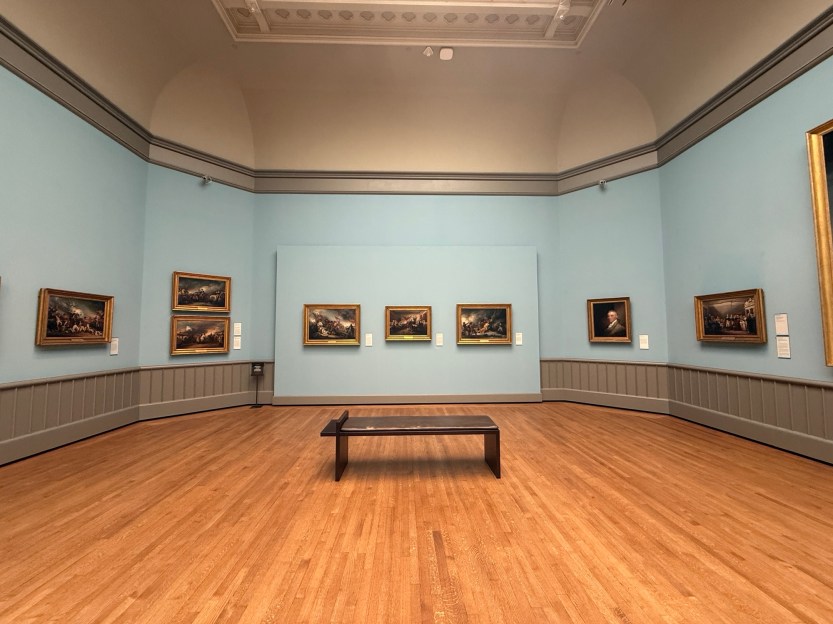
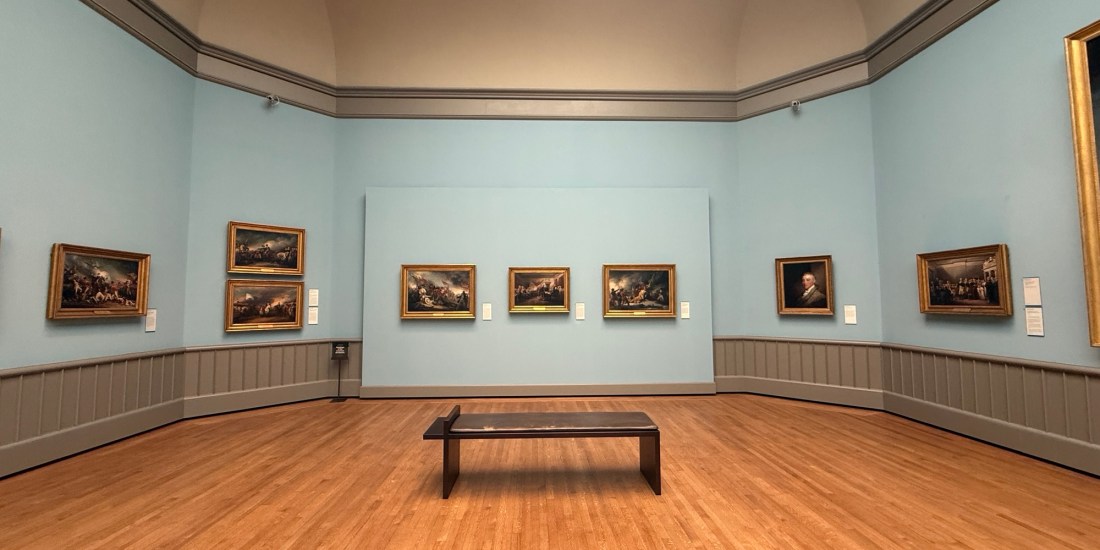
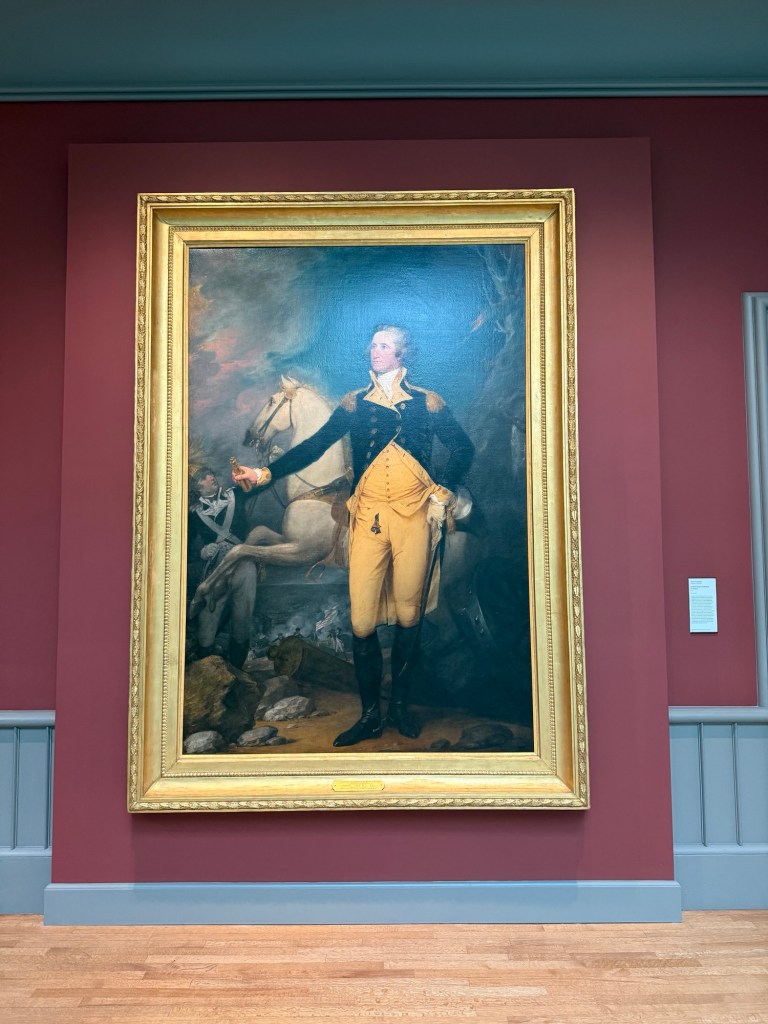
Trumbull’s Revolutionary War series, on view at Yale, was completed over the span of four decades. The eight canvases are The Death of General Warren at the Battle of Bunker’s Hill, June 17, 1775; The Death of General Montgomery in the Attack on Quebec, December 31, 1775; The Declaration of Independence, July 4, 1776; The Surrender of General Burgoyne at Saratoga, October 17, 1777; The Surrender of Lord Cornwallis at Yorktown, October 19, 1781; General George Washington Resigning His Commission, December 23, 1783; The Capture of the Hessians at Trenton, December 26, 1776; and General George Washington at Trenton, January 2, 1777. Together, these works depict pivotal battles, political milestones, and civic triumphs that shaped the nation’s founding and secured its independence from Great Britain.
Trumbull was deeply invested not only in the creation of the series but also in how it would be experienced. He stipulated the order in which the paintings should be displayed, creating a visual narrative of the Revolution that unfolded chronologically and thematically. Today, the works are installed outside of that original arrangement, a decision that diminishes some of the narrative force that Trumbull intended. As someone who made the pilgrimage to New Haven primarily to see this series, I found myself wishing for greater attention to the artist’s vision throughout the gallery. That sentiment extended to the museum gift shop, where references to Trumbull were surprisingly scarce beyond a postcard of The Declaration of Independence and a portrait of Washington. Given the foundational role Trumbull played in the creation of the gallery and the extraordinary gift he bestowed upon Yale, one cannot help but wish that his presence, and the remarkable achievement of this series, were more prominently celebrated especially in light of the semiquincentennial.
P.S. – I would be remiss if I failed to mention I visited on Trumbull’s birthday 🙂
Categories: #marysmusings, #museum, arthistory


Goodness Mary, you make me so proud every time I read your writing about your exploits! 🙂
Happy semiquincentennial!
LikeLike